
Caring for someone with dementia changes how families think about safety. What used to be small daily routines can become higher-risk moments. A walk around the block can turn into wandering. A missed phone call becomes a serious concern. A fall, an unlocked door, or a few minutes of disorientation can escalate quickly.
That is why so many families begin looking for safety devices specifically designed for people with dementia. They are not searching for gadgets. They are searching for practical tools that reduce real risk, support as much independence as possible, and help caregivers respond faster when something goes wrong.
The best safety devices for dementia patients do three things well: they help prevent unsafe situations, they make problems easier to detect quickly, and they give caregivers a dependable way to respond. In this guide, we will walk through the most useful types of dementia safety devices, what features matter most, and how to choose the right setup for your loved one.
Why Dementia Safety Devices Matter
Dementia affects memory, orientation, judgment, and awareness of surroundings. That means safety challenges can appear both inside and outside the home.
Common concerns caregivers face include:
- Wandering from home
- Getting lost during walks or errands
- Falls without immediate help nearby
- Leaving the house unexpectedly at night
- Forgetting to carry or answer a phone
- Removing safety devices
- Difficulty communicating during an emergency
No single device solves all of these problems at once. But understanding the main categories of dementia safety devices makes it much easier to build a setup that matches your loved one’s specific needs and risks.
What Are the Best Types of Safety Devices for Dementia Patients?
Dementia safety devices generally fall into a few main categories. The right combination depends on where your loved one spends most of their time, how independent they still are, and which risks feel most urgent right now.
1. GPS Wearables

GPS wearables are one of the most valuable safety tools for dementia patients who are still mobile, go outdoors, or may wander. These devices let caregivers see their loved one’s location in real time and typically include features like emergency alerts, geofencing, and two-way calling.
For many families, this becomes the first and highest-priority device category, because it addresses safety outside the home — where the risk of a serious incident rises quickly.
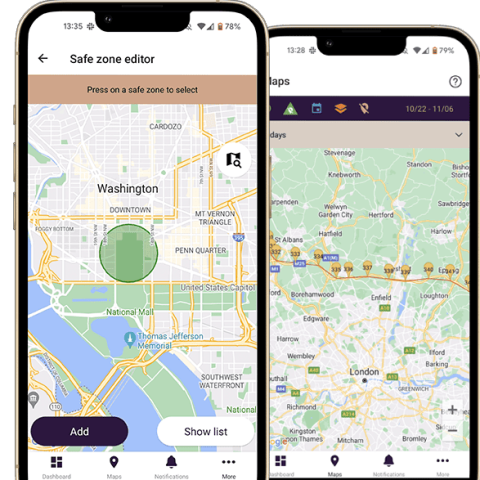
The Tranquil GPS Watch is designed specifically for seniors and people with dementia. It includes 24/7 real-time GPS tracking, customizable safe-zone (geofence) alerts, two-way calling with auto-answer so caregivers can reach their loved one directly, an SOS button that escalates through up to eight contacts until someone responds, and up to a full week of battery life between charges. The Watch is also fully waterproof to IP67 standards, meaning it can be worn through showers and daily activities without being removed.
2. Fall Detection Devices
Falls are a serious concern in dementia care, especially when someone is living semi-independently or moving around without constant supervision. Dedicated fall detection devices use accelerometers or other sensors to identify sudden drops and immediately alert a caregiver — shortening response time in situations where a person may not be able to call for help.
This type of device is particularly valuable when a loved one can no longer reliably use a phone after a fall, or may not realize they need help. Several medical alert systems and specialist wearables on the market offer automatic fall detection as a core feature. When comparing options, look for a device that sends alerts passively — without requiring the wearer to press a button — so help can arrive even if the person is confused or unconscious.
Note: If fall detection is a primary concern for your loved one, we recommend speaking with your physician or care coordinator about the most appropriate device for your specific situation.
3. Door and Home Monitoring Sensors
For families concerned about nighttime wandering or unsupervised exits, in-home monitoring systems can add a helpful layer of visibility. These setups typically include door sensors, motion sensors, bed sensors, and routine-based alerts that notify caregivers when something unexpected happens inside the home.
In-home sensors work well for patients who spend most of their time at home, but they do not address safety once someone has left the house. That is why they are most effective as part of a broader safety system rather than a standalone solution.
The Tranquil Watch supports early home-exit detection through a Bluetooth beacon that connects to your loved one’s home. As soon as they leave the house, you receive an instant alert — by app, call, or email. You can learn more about how this works on the Tranquil support page.
4. Medical Alert and SOS Devices
Emergency-button devices allow patients to call for help or alert a caregiver when something goes wrong. These are useful when the person is still able to recognize a problem and press a button.
The practical limitation for many dementia patients is that they may forget to use the device, may not realize there is a problem, or may not be able to explain their location. This is one reason many caregivers prefer a device that combines SOS support with live GPS tracking and two-way communication — so the caregiver can reach out first, rather than waiting for the wearer to initiate.
The Tranquil Watch includes an SOS button that, when pressed, automatically calls a sequence of up to eight designated contacts until someone picks up and confirms they’ve received the alert. Two-way calling with auto-answer means you can also reach your loved one proactively — no action required on their end. See how this works on the Tranquil product page.
5. Tamper-Resistant Wearables
A safety device only works if it stays on. That sounds simple, but it is one of the most common frustrations families encounter in practice. Some people with dementia remove watches, pendants, or bracelets because they feel unfamiliar, uncomfortable, or confusing.
This is where tamper-resistant or locking wearables become far more practical than standard accessories.
The Tranquil Watch comes with a free tamper-proof locking strap that can only be removed with a special tool. It is designed to be low-profile and to look like a normal watch clasp, so it does not draw attention or cause alarm for the wearer. You can see the locking strap options on the accessories page.
What Are the Best Types of Safety Devices for Dementia Patients?
Caregivers often begin with a broad search, but the actual buying decision usually comes down to a short list of practical requirements. Here is what to prioritize.
Real-Time GPS Tracking
A device should show where your loved one is right now, not just where they were an hour ago. This matters most when wandering is a concern, and response time is critical.
Caregiver Alerts
Good devices do not just collect information — they tell you when something important happens. The most useful alert systems notify you the moment a loved one leaves a safe zone, exits the home, or triggers an emergency, via app notification, phone call, or email.
Two-Way Communication
Being able to speak directly through the device — without the wearer needing to answer a call themselves — can help calm confusion, guide someone home, or let you quickly assess whether help is needed.
Long Battery Life
A device that needs daily charging becomes an unreliable one. Longer battery life reduces the chance that the watch is dead when it matters most and lowers the daily burden on caregivers.
Waterproof Design
If a wearable has to come off for showers or hand washing, it is more likely to be left behind or forgotten. A waterproof device can be worn all day, every day, without interruption.
Secure, Comfortable Fit
If your loved one regularly removes accessories, a locking strap or tamper-resistant design becomes one of the most important features to look for — regardless of what else the device offers.
Which Safety Device Is Best for Most Dementia Caregivers?
For many families, the most practical starting point is a GPS watch with strong caregiver alerts and built-in communication — because it addresses multiple high-priority risks at once.
A GPS watch:
- Stays with the person more reliably than a phone
- Works both inside and outside the home
- Enables faster response during a wandering event
- Gives caregivers a way to check in without waiting for the person to answer a phone
- Preserves more independence than constant supervision
- Can be worn all day without being charged mid-day
That is not to say a GPS watch replaces every other tool. Many families find that a layered setup works best — for example, pairing in-home door sensors for nighttime awareness with a GPS watch for daytime and outdoor coverage. The right combination depends on where your loved one spends time and what risks feel most urgent.
Why the Tranquil Watch Stands Out
The Tranquil Watch was designed specifically for seniors with dementia and age-related cognitive decline — not adapted from a fitness tracker or a general-purpose smartwatch. That focus shows in how the device is built.
It looks like a traditional dress watch, not a medical device, which means most wearers accept it without resistance. It is available in four elegant colorways and comes with premium leather or silicone straps.
On the safety side, it combines real-time GPS tracking with a Bluetooth home-exit beacon, customizable geofence alerts, an SOS button with escalating multi-contact calls, and two-way calling with auto-answer. The battery lasts up to a full week — significantly longer than most GPS trackers, which require daily charging. The Watch is rated IP67 waterproof, which means it can safely be worn in the shower or during daily activities without needing to come off.
For caregivers, setup is straightforward. QR-linked installation videos walk you through each step, and live support is available seven days a week if anything is unclear. The Watch ships free anywhere in the US, and every purchase includes a 30-day risk-free trial with return shipping covered.
Best Use Cases for Dementia Safety Devices
Early-Stage Wandering Concerns
If your loved one is still active and mobile but has started becoming confused outside the home, a GPS wearable is often the most practical first step. It gives caregivers visibility without restricting independence.
Nighttime Exit Risk
If someone is leaving the bedroom or the house unexpectedly at night, in-home door or motion alerts — or the home-exit beacon that pairs with the Tranquil Watch — can add a useful early-warning layer.
Refusal to Carry a Phone
A watch-style wearable is far more dependable than relying on a smartphone the person may forget, lose, or ignore. The Tranquil Watch has its own built-in cellular connection, so the wearer does not need a phone at all — the caregiver uses the companion app to track location and manage alerts.
Device Removal Risk
If your loved one frequently removes accessories or wearables, a locking strap becomes more important than any other single feature. The Tranquil Watch ships with a free tamper-proof locking strap for exactly this reason.
Caregiver Fatigue
For caregivers managing everything on their own, a device that runs for a full week between charges, sends alerts automatically, and requires no action from the wearer significantly reduces the daily mental load.
How to Choose the Right Device
When evaluating dementia safety devices, these questions are a useful starting point:
- What is the highest-risk scenario for your loved one right now — wandering, falls, nighttime exits, or something else?
- Will your loved one actually tolerate wearing this device day-to-day?
- Do you need active caregiver alerts, or is passive monitoring enough?
- Does the device work without the wearer managing a phone?
- How important are battery life and waterproofing for your situation?
- Is device removal a current or likely problem?
Start with the highest-risk problem and build from there. For many families, a GPS watch that combines tracking, alerts, communication, and everyday wearability in one device is the most practical place to begin.
Final Thoughts
The best safety devices for dementia patients are the ones that reduce real risk in everyday life. That usually means focusing less on novelty and more on function: tracking, alerts, communication, secure wearability, and reliable caregiver visibility.
Some families will need a combination of tools. But for many caregivers, the most useful starting point is a GPS watch that supports wandering prevention, emergency communication, and everyday peace of mind — all in one device that your loved one is willing to wear.
If that sounds like what you’re looking for, the Tranquil Watch is worth a close look. Every purchase includes a 30-day risk-free trial, free return shipping, and a dedicated support team available every day of the week.
